Saturday, January 23, 2016
PAY REVISION ORDERS 2016 GO(P) No.07/2016/Fin Dated 20/01/2016https://sites.google.com/site/secretariatemployeesasso/pay-revision-software
Thursday, October 29, 2015
Bar scam: Vigilance report acquitting Mani dismissed
Tuesday, October 13, 2015
ശ്രീ അനന്തപത്മനാഭ സ്വാമി ക്ഷേത്രം
Wednesday, July 15, 2015
PAY FIXATION SOFTWARE 2015
Tuesday, May 5, 2015
Top Maoist couple Roopesh and Shyna arrested by Andhra Pradesh Police
Maoist couple Roopesh and P A Shyna, wanted in connection with at least 30 cases in Kerala, were arrested along with three other suspected Maoists by the Andhra Pradesh police from Coimbatore on Friday. Roopesh, in-charge of the Western Ghats zone of the Communist Part of India (Maoist), had been leading the Maoist movement in Kerala along with his wife. Kerala Home Minister Ramesh Chennithala confirmed the arrests and said the suspected Maoists had moved to Tamil Nadu in the wake of heightened vigilance in Kerala. He added that the arrests were a result of the police forces of several states working together.
According to officials, the intelligence bureaus of Andhra Pradesh, Tamil Nadu, Kerala, Karnataka and Telangana joined forces to make the arrests. The alleged Maoists are being questioned by officials of the Andhra police and the Tamil Nadu Q-branch, and would subsequently be taken to Kerala for questioning to ascertain their role in various cases in the state. Roopesh and Shyna were believed to be preparing for an armed struggle in the Kerala-Tamil Nadu-Karnataka tri-junction. The couple, along with Anoop, Kannan and Eswaran, were arrested from a bakery in Karumathampatti in the evening, when they were having tea, police said. A police team from Andhra Pradesh, in coordination with the Tamil Nadu Q-branch officers, surrounded the bakery around 8.30 pm based on an intelligence tip-off. “Arrests were made without much trouble, although they did raise slogans when they were asked to surrender,” said an official. Another officer told The Indian Express that Roopesh, who was in-charge of the Western Ghats zone of CPI(Maoist), had been on the radar of the Andhra police for a number of cases registered against him in the state. Sources close to Roopesh said that they had received reports of his arrest four days ago. “Now we are told that they may be produced before the magistrate tomorrow,” sources said. A law graduate with a diploma in Information Technology, Roopesh had been at the centre of a police manhunt for four years, and had been in hiding for more than a decade. Before joining the CPI(Maoist), he was with the Communist Party of India (Marxist-Leninist) People’s War Group. Lately, he had been heading the newly formed South Indian Regional Committee of Maoists, coordinating their activities on the Kerala-Karnataka-Tamil Nadu tri-junction. In 2013, he wrote a novel which was published by two publishing houses in Kerala under two different titles — ‘Maoist’ and ‘Vasanthathile Poomarangal (Flowering trees of spring)’. Shyna, a former employee of the Kerala high court, was in the news in 2011 after she wrote a letter to Chief Minister Oommen Chandy seeking action against police officials who allegedly harassed her 71-year old
The couple came under the radar of intelligence agencies after they allegedly gave shelter to Malla Raji Reddy, a Politburo member of CPI(Maoist) arrested in 2007 from Angamali in Kerala. Although Shyna was also arrested in the case, she was released on bail in 2008 and then went underground. Their elder daughter Amy said that the couple had studied law after marriage. “One would study while the other would work. They married to continue their political activity,” Amy said. She said Roopesh had gone into hiding 2002 and Shyna in 2008. “After the birth of my younger sister Savera, now an upper primary school student, Roopesh rarely visited us at home. We, the daughters, went to several places to meet our parents,” she had told The Indian Express recently. “As a daughter, I would support their struggles. I realise my parents’ struggle is also meant for me and my future. For me, they are the true leaders who remain dedicated to their cause,” she added. Police said that with the arrests, they had busted the entire Western Ghats Committee of the CPI(Maoists), which was operating on the Tamil Nadu-Kerala border. They added that the arrest of the couple was the biggest catch since the arrest of Kobad Ghandy in 2009. Police added that an editorial in a Maoist journal in March, which hailed the progress made by the committee in the tri-junction area, had rattled the forces and added impetus to their hunt.
Sunday, April 19, 2015
Sitaram Yechury is new CPM general secretary
Tuesday, March 24, 2015
SC strikes down Section 66A of IT Act , and Kerala Police Act 118 D. All you need to know about the controversial law
The Supreme Court on Tuesday struck down Section 66A of the Information & Technology Act and Kerala Police Act 118 D today after hearing a clutch of petitions challenging it.
The case has been closely followed, mostly for its implications on how Indians can use the Internet and social media, and because of its implications on the freedom of speech.
Here is all you need to know about section 66A, the cases against it, and what the controversies surrounding it are:
What does section 66A of the IT act actually say?
"Any person who sends, by means of a computer resource or a communication device,—
(a) any information that is grossly offensive or has menacing character; or
(b) any information which he knows to be false, but for the purpose of causing annoyance, inconvenience, danger, obstruction, insult, injury, criminal intimidation, enmity, hatred or ill will, persistently by making use of such computer resource or a communication device,
(c) any electronic mail or electronic mail message for the purpose of causing annoyance or inconvenience or to deceive or to mislead the addressee or recipient about the origin of such messages,shall be punishable with imprisonment for a term which may extend to three years and with fine."
The issues with the wording of the act
One of the main problems with the act is the fact that it is framed in vague and sweeping language, which allows law enforcement authorities to interpret it in a subjective manner. What, for instance is information that is 'grossly offensive' and has menacing character'? If someone were pro-life, for instance, they may find an email forward endorsing abortion 'grossly offensive'. Similarly, if someone were a religious purist who believed God created the world in seven days, they may find a status update on evolution to be 'false information'. By making the act so open ended and subjective, the government is trying to save itself the trouble of having to define each and every cyber crime, but what they have overlooked or ignored is that in its present form, the act also easily lends itself to prosecuting people who dare to have and express a controversial or different opinion that may not necessarily be dangerous.
This issue was also brought up by the Supreme Court while it was hearing the petitions against the act.
Dealing with the word "grossly offensive", the bench referred to the judgement cited by the ASG and said, "what is grossly offensive to you, may not be grossly offensive to me and it is a vague term." "Highly trained judicial minds (judges of the UK courts) came to different conclusions by using the same test applied to judge as to what is grossly offensive and what is offensive," the court added.
In fact one of the judges on the case, Justice Nariman, even gave an example to the court of how the vague definition of 'grossly offensive' could be dangerously twisted. According to a Times of India report, he said in court, ""I can give you millions of examples but take one burning issue is of conversion. If I post something in support of conversion and some people, not agreeable to my view, filed a complaint against me then what will happen to me?"
The petitions against the act
Some of the petitions seek setting aside of section 66A of the Information Technology Act which empowers police to arrest a person for allegedly posting offensive materials on social networking sites.
The first PIL on the issue was filed in 2012 by law student Shreya Singhal, who sought amendment in Section 66A of the Act, after two girls -- Shaheen Dhada and Rinu Shrinivasan -- were arrested in Palghar in Thane district as one of them posted a comment against the shutdown in Mumbai following Shiv Sena leader Bal Thackeray's death and the other 'liked' it.
Most activists and policy experts point out that the Section 66A is loosely worded and puts too much powers in the hands of the police.
Recent controversies surrounding the act
Much of the outrage surrounding section 66A has been because of arbitrary arrests of people posting content on social media against various politicians, with police using the vague language of the act to their advantage.
As pointed out by Firstpost editor Sandip Roy, "There’s nothing in Section 66A that’s specific to politicians, but politicians of all stripes have seized on it as the handy bully club to squelch all kinds of dissent from cartoons to abuse. There’s that old saying jiski laathi uski bhains(whoever owns the big stick, owns the buffalo). For our politicians, Section 66A is the big stick."
Apart from the two girls who were arrested in Maharashtra mentioned earlier, some other controversial arrests around the act are:
* A tourism officer in Varanasi was arrested for uploading “objectionable” pictures of Mulayam Singh Yadav, Akhilesh Yadav and Azam Khan on Facebook.
* Ambikesh Mahapatra, a Jadavpur University professor, was arrested in Kolkata for forwarding a cartoon about Mamata Banerjee.
* In Goa last year, police booked a young shipping professional for a Facebook post which said that the Prime Minister-elect Narendra Modi would start a holocaust in India. Devu Chodankar had written on a Facebook forum on Goa+, a popular forum with over 47,000 members, if elected to power, Modi would unleash a 'holocaust'. He deleted his post subsequently. Chodankar later apologised for his choice of words but stood by the sum of his argument, calling it his crusade against the “tyranny of fascists”.
* Most recently a class 11 student was arrested for making a Facebook post about UP minister Azam Khan. “A Class XII student made comments against me on FB. Law is enforced with strictness and he has been arrested within 24 hours,” Khan told the media.
* A man was arrested in Puducherry for tweeting that Karti Chidambaram, son of then union minister P Chidambaram was 'corrupt'.
The government's defence of 66A
The main defence of the government has been that the act cannot be "quashed" merely because of the possibility of its "abuse".
According to a report in Times of India, additional solicitor general Tushar Mehta told the court that “there was a need for a mechanism to put checks and balances on this medium”, because the Internet doesn’t “operate in an institutional form.”
He told the court that, “Considering the reach and impact of medium, leeway needs to be given to legislature to frame rules. On the Internet every individual is a director, producer and broadcaster and a person can send offensive material to millions of people at a same time in nanosecond just with a click of button.”
Mehta also said that the vague wording of Section 66A, which said ‘grossly inoffensive’ content could land someone in prison for three year, was not a good enough reason to get rid of the section.
In the earlier hearings, Mehta had given examples of how the Ministry of Defence and External Affairs, received emails that were designed to hack and steal information from the ministries, in an effort to convince the court that Section 66A was needed to prevent such activities.
What the court has said so far
Apart from raising objections to who could determine what constituted 'grossly offensive content', the court has also not been impressed with the government argument that the section was needed to protect government data from hackers, and had pointed out that this eventuality was already dealt with viruses and hacking for which Section 65 of the IT Act was relevant.
The apex court had also on 16 May, 2013, come out with an advisory that a person, accused of posting objectionable comments on social networking sites, cannot be arrested without police getting permission from senior officers like IG or DCP.
The direction had come in the wake of numerous complaints of harassment and arrests, sparking public outrage.
It had, however, refused to pass an interim order for a blanket ban on the arrest of such persons across the country.
Friday, February 13, 2015
266 kg gold missing from Sree Padmanabhaswamy temple: Audit report
As much as 266 kg gold is missing from the famed Sree Padmanabhaswamy temple, said former chief government auditor Vinod Rai in his audit report that he submitted to the apex court on Friday.
According to media reports,of the 893 kg gold that was given out for various works, only 627 kg has been returned to the temple.
Rai was asked by the Supreme Court last year to conduct an audit of the temple's books and accounts.
A division bench of Justice R.M. Lodha and Justice A.K. Patnaik last April in its interim order had asked Rai to undertake the audit of the temple accounts and properties for the past quarter of a century. This directive came on the recommendations of amicus curiae Gopal Subramaniam, who had sought overhauling of the functioning of the temple.
Apart from asking Rai to audit the accounts of the temple, the apex court also directed the formation of a new five-member committee comprising of a judge from the capital city, the temple tantri, chief nambi of the Sri Padmanabhaswamy temple and two more members, of which one will be appointed in consultation with the state government and one would be the choice of the judge.
It was in July 2011 that an apex court committee stumbled upon six vaults in the temple and with just vault B left to be opened, the treasure that has been found in the other five vaults have been estimated to be valued more than Rs.100,000 crore.
Since then, armed security guards besides state of the art security equipment has been deployed for the safe upkeep of this treasure.
Reacting to the new developments, Communist Party of India-Marxist legislator V.Sivankutty said that a few years back all hell broke loose when V.S.Achuthanandan said that things are not going the way it should go in the temple as far as the priceless treasures upkeep are concerned and blamed the Travancore royal family.
"Look, what Rai has come out with in his report. There are some views from some quarters that the issues of this temple should be hushed up. Now with this report, responsibilities should be fixed and those people who have caused this should be brought to light," he said.
The erstwhile Travancore Royal Family with its headquarters in the capital city is however yet to react on Rai's report.
Mr. Rai’s report follows a Supreme Court order on April 24, 2014 to conduct a special audit of the temple and its properties “as early as may be possible”.
He points to how the B Kallara was opened twice in 1990 and fives times in 2002. “Silver ingots were taken out and gold vessels were deposited and subsequently taken out,” the report said.
The audit was prompted by an exhaustive but damaging amicus report filed by senior lawyer Gopal Subramanium — an outcome of a 35-day stay on the temple premises — that indicated that gold and silver jewellery offered by devotees to the Sree Padmanabhaswamy Temple were not accounted for by the temple administration.
Graft alleged
The report had complained of corruption, filth, and disregard of ethics in the temple’s administration.
Alarmed by the report, the court had invited Mr. Rai as the Special Audit Authority on Mr. Subramanium's suggestion.
In what seems to be a sequel of the amicus’ findings, Mr. Rai said: “preliminary audit findings point towards deficiencies and inadequacies in maintenance of records. There is also incomplete information provided in the records for the weight and purity of the gold and silver items.
Auction process
The tendering and auction process needs streamlining. The register of temple assets is not also up-to-date”.
Mr. Rai said, “prima facie, there is lack of financial control of the custody and use of precious articles”.
He said over 72 audit notes have been sent to the temple management on the discrepancies and deficiencies, but most of them have not been replied to.
Comprehensive audit
The former CAG proposes to conduct a complete audit of records of the past 15 years in the first phase, and then audit the records of the preceding 10 years in the second round.
Mr. Rai said there is no credible accounting procedures in the temple administration.
He said the long-term objective of this Special Audit is to draw up a “comprehensive and appropriate system of accounting drawing on lessons from the deficiencies of the prevailing system”.
Tuesday, February 10, 2015
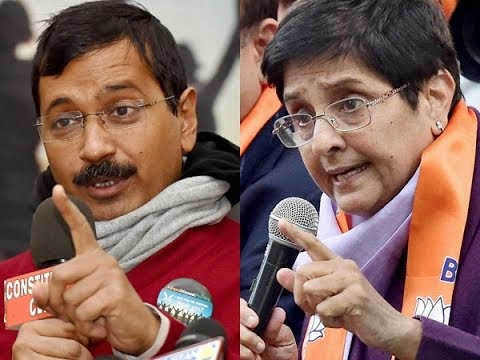
Delhi election results 2015: AAP makes inroads into BJP’s upper class vote
Friday, January 9, 2015
Trial in Palm Oil case should continue : High Court
Quashing a plea of the United Democratic Front (UDF) government seeking to close the palmolein scam, the Kerala high court on Thursday ordered that the trial into the case should continue. This comes as a setback to the government as the court approved the Vigilance court’s stance that the case should not be closed now.
Justice P Ubaid pronounced the order on an appeal filed by the state government and Jiji Thomson, a senior IAS officer, against the Vigilance court order, which rejected the plea to withdraw the case.
“The withdrawal of the case will only help the accused. It would be against the public interest,” the court observed, adding, “the fact that the key witnesses are not alive is not reason enough to close the case.”
Opposition leader VS Achuthanandan and VS Sunil Kumar, MLA, had moved the high court citing it would be unfair to withdraw corruption cases. The court made it clear that both Achuthanandan and Sunil Kumar could intervene in the issue on behalf of the public.
The UDF government had requested to withdraw the decades-long case that originated in 1991, when K Karunakaran was chief minister, citing there was no point in continuing as three officials with the civil supplies, who had given key statements in the case, had died. Karunakaran, who was the key accused, is also no more. However, the Vigilance Court in Thrissur had ordered that the case should not be withdrawn.
The government claimed that the Vigilance had held that the Cabinet’s decision to import palmolein was right. Moreover, the Centre had not given the nod to try former Vigilance Commissioner PJ Thomas and Jiji Thomson. However, the Vigilance Court rejected all these claims.
Achuthanandan and Sunil Kumar had claimed that the decision to withdraw the case, which caused severe loss to the state exchequer, was ill-aimed and politically motivated.
The Vigilance Court, had, however, rejected the plea to conduct a probe against chief minister Oommen Chandy.
The case alleged irregularities in the import of palmolein by the government through Power and Energy Limited Company, a Singapore-based firm. The investigation agency’s charge sheet says the government’s decision caused a loss to the tune of Rs 2.32 crore to the exchequer. The decision was to import 15,000 tonnes of palm oil.
Opposition seeks CM’s resignation
Meanwhile, the Opposition LDF has demanded the resignation of chief minister Oommen Chandy as he was the finance minister when the scam occurred. Pannyan Raveendran, secretary, CPI state council, said the high court order is a charge sheet against the government and the chief minister is responsible for that.
Opposition leader VS Achuthanandan, in a press conference today, said Chandy should resign from the post. He also urged the government not to appoint Jiji Thomson, director, Sport Authority of India (SAI), as chief secretary of the state. He is also one of the accused in the case.
Tuesday, January 6, 2015
Sunanda Pushkar was murdered: Delhi Police
Almost a year after Sunanda Pushkar was found dead in a five-star hotel in New Delhi, the police on Tuesday registered a case of murder, putting aside all the alternative and speculative theories revolving around her death.
50-year-old Sunanda was an Indo-Canadian businessperson and the wife of then minister of state for human resource development, Shashi Tharoor.
The Delhi police on Tuesday said that Sunanda was poisoned and that the poison was either administered to her by mouth or injection. The police have relied on medical and forensic reports while registering a case under section 302 of the IPC.
"We have got the final medical report from AIIMS, and we have been told that it was an unnatural death... It was not a natural death," Delhi Police chief B S Bassi told the media.
"She died due to poisoning. Whether the poison was given orally or injected into her body is being investigated," he said, adding the report from the All India Institute of Medical Sciences (AIIMS) was received on Dec 29.
Bassi said the quantum of poison given to Pushkar, who was 52, had not yet been ascertained. "For that we will send her viscera abroad."
A murder case had now been registered against unknown persons at Delhi's Sarojini Nagar police station, the police chief said.
A special team led by DCP (south) Prem Nath and additional DCP (south) Kushwah has been formed to investigate the case. The police will go for a re-investigation in the case which was earlier being probed under 174 CrPC, treating the death as unnatural.
Former Union minister Shashi Tharoor may also be questioned by Delhi Police. Sunanda Pushkar, wife of Shashi Tharoor, was found dead in a five-star hotel room on January 17, 2014 in the capital this year.
A day before she was found dead, Tharoor and Pushkar had issued a joint statement saying they were distressed by a row over some unauthorized tweets posted from their Twitter account and that both were "happily married and intend to remain that way".
The statement claimed that distorted accounts of comments allegedly made by Pushkar, alleging an affair between her husband and a Pakistani journalist, had led to some erroneous conclusions.
The medical investigation into Sunanda Pushkar's death took many twists and turns through the past year.
The first autopsy report, submitted to a magistrate on January 20 last year, had said that Tharoor's wife died due to drug overdose. But it also reported a dozen injury marks on her body.
The final autopsy report that came out in July put the number of injury marks at 15. All the injuries were caused by blunt forces except one which was an injection mark.
Later, Sudhir Kumar Gupta, who headed the forensic team in AIIMS, alleged that he was pressured to show that Pushkar's death was natural.
The AIIMS denied the allegation, and Gupta was removed from the post.
Congress leader Shashi Tharoor's wife Sunanda Pushkar did not commit suicide but was murdered, Delhi Police chief BS Bassi said on Tuesday.
"We have got the final medical report from AIIMS, and we have been told that it was an unnatural death," Bassi told the media.
Here are some of the details we know in the murder case of Sunanda Pushkar:
*Sunanda Pushkar died due to poisoning
*Whether the poison was given orally or injected into Sunanda's body is being investigated
*Police are getting Sunanda's viscera tested abroad to zero in on the poison in her body.
*A murder case had now been registered in connection with Sunanda Pushkar's death.
*An FIR has been filed under section 302 against unknown persons in Sarojini Nagar police station
*A special team has been formed to probe the case. This will be overseen by deputy commissioner of police Prem Nath.
* Autopsy report points to over 15 injury marks on Sunanda's body
*Shashi Tharoor may also be questioned.
*Delhi Police are reportedly seeking the list of passengers who travelled from Dubai and Pakistan to Delhi, and vice versa, on January 17 — the day Sunanda was found dead.
*A day before she was found dead, Tharoor and Pushkar had issued a joint statement saying they were distressed by a row over some unauthorized tweets posted from their twitter account and that both were "happily married and intend to remain that way".
Thursday, December 4, 2014
Justice VR Krishna Iyer, eminent jurist, dies in Kochi
Subscribe to:
Posts (Atom)


.jpg)
.jpg)


.jpg)

.jpg)
.jpg)
.jpg)


.jpg)

.jpg)


.jpg)


.jpg)
.jpg)
.jpg)

.jpg)
.jpg)


2.jpg)